

Be first to read the latest tech news, Industry Leader's Insights, and CIO interviews of medium and large enterprises exclusively from Retail Tech Insights
A featured contribution from Leadership Perspectives: a curated forum reserved for leaders nominated by our subscribers and vetted by the Retail Tech Insights Advisory Board.

Aimé Leon Dore
The Future of Product Leadership: Building Resilient, Intelligent Product Creation Systems
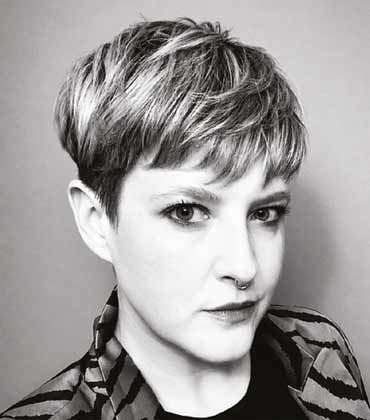
Megan Ryley
Over the course of my career, I have had the opportunity to work across nearly every stage of the product creation process, from design and development to sourcing, manufacturing and executive leadership. One of the experiences that most profoundly shaped my perspective was owning and operating a factory in India earlier in my career. Seeing the industry from both the brand and manufacturing sides fundamentally changed how I think about leadership, supplier relationships and the realities of bringing products to market.
Early in my career, I viewed product development as a series of functional disciplines that needed to be managed effectively. Today, I see it as a highly interconnected ecosystem where creative, commercial, operational and manufacturing decisions are constantly influencing one another. As a result, my leadership approach has become increasingly collaborative and systems-oriented. Success rarely comes from optimizing a single department. It comes from creating alignment across functions and helping teams understand how their decisions impact the broader business.
That mindset has become even more important as the complexity of global product creation continues to increase. Product organizations today face a unique combination of challenges: geopolitical uncertainty, shifting trade policies, inflationary pressures, evolving sustainability expectations and increasingly compressed development calendars. At the same time, consumers continue to expect innovation, quality, speed and value.
In this environment, resilience has become just as important as efficiency.
For many years, global sourcing strategies were primarily built around cost optimization. Today, leading organizations are taking a more balanced approach. Diversification across regions, stronger supplier partnerships, improved visibility into supply chains and contingency planning have become critical capabilities. The goal is no longer simply to produce products at the lowest possible cost. It is to build sourcing networks that can adapt quickly while maintaining quality and business continuity.
One of the most important shifts I have observed is the evolution of supplier relationships. Historically, manufacturers were often viewed primarily as vendors. Increasingly, the most successful brands recognize their suppliers as strategic partners who contribute expertise, innovation and operational insight. Some of the most impactful solutions to product, quality and cost challenges originate from manufacturing partners themselves. Organizations that foster transparency, trust and long-term collaboration often gain a significant competitive advantage.
"Effective product teams know when to pursue breakthrough innovation and when to focus on elevating proven concepts."
Balancing innovation, quality and cost remains one of the central responsibilities of product leadership. While these priorities are often viewed as competing objectives, I believe the strongest organizations treat them as interconnected outcomes of a welldesigned product strategy.
Innovation does not always require constant reinvention. Some of the most successful products are the result of thoughtful refinement, improved execution and deeper understanding of consumer needs. Effective product teams know when to pursue breakthrough innovation and when to focus on elevating proven concepts.
Quality must also be embedded into the development process from the beginning rather than inspected at the end. The earlier teams align around technical requirements, material selection and manufacturing feasibility, the more efficiently they can avoid costly corrections later in the process.
Similarly, sustainable cost improvement rarely comes from negotiation alone. The most meaningful gains often result from simplifying assortments, reducing unnecessary development complexity, leveraging common platforms across multiple products and creating greater predictability for manufacturing partners. In many cases, smarter systems create far greater value than incremental cost reductions.
Looking ahead, technology will continue to transform how product organizations operate. Artificial intelligence, predictive analytics, digital product creation tools and enhanced supply chain visibility platforms are already improving decision-making throughout the product lifecycle. While technology will never replace human judgment, it has tremendous potential to eliminate inefficiencies and allow teams to focus on higher-value strategic work.
At the same time, sustainability will increasingly shift from a compliance exercise to a business imperative. The future will belong to organizations that design more responsible systems— reducing waste, improving resource utilization and creating greater transparency throughout the supply chain while maintaining commercial performance.
For professionals aspiring to leadership roles in product development and production, my advice is to prioritize breadth of experience. Spend time understanding multiple aspects of the product creation process, including design, materials, sourcing, costing, manufacturing, logistics and business strategy. The leaders who create the greatest impact are often those who can connect disciplines rather than operate exclusively within one area of expertise.
Equally important is the ability to build relationships. Product creation remains a people-driven business. Technical knowledge is essential, but trust, communication and collaboration are often what determine whether complex challenges become obstacles or opportunities.
The future of product leadership is no longer simply about managing development calendars and factory relationships. It is about orchestrating a global ecosystem of creative, commercial and operational partners while making smarter decisions through data, technology and collaboration. Organizations that embrace that broader perspective will be best positioned to navigate uncertainty and create lasting competitive advantage.
